what is PPC advertising
Introduction
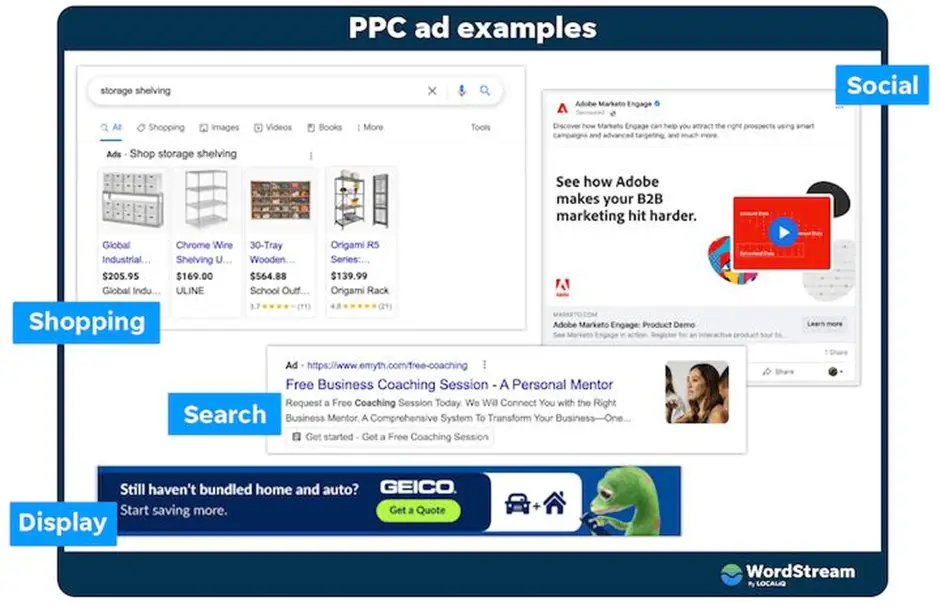
PPC (Pay-Per-Click) Advertising example on Google search results.
In today’s fast-moving digital world, businesses don’t just rely on organic traffic to grow—they also invest in paid strategies. One of the most powerful and widely used methods is PPC (Pay-Per-Click) Advertising.
If you’ve ever searched something on Google and noticed the top results labeled as “Sponsored,” those are part of PPC marketing. This model allows businesses to place their ads in front of potential customers and pay only when someone clicks on them.
Unlike traditional marketing, where you pay upfront without guaranteed results, PPC marketing ensures that you only pay for actual engagement. This makes it a cost-effective and performance-driven marketing strategy.
In this blog, we’ll break down PPC marketing in the simplest way possible so that even beginners can understand how it works and how to use it effectively.
What is PPC (Pay-Per-Click) Advertising?
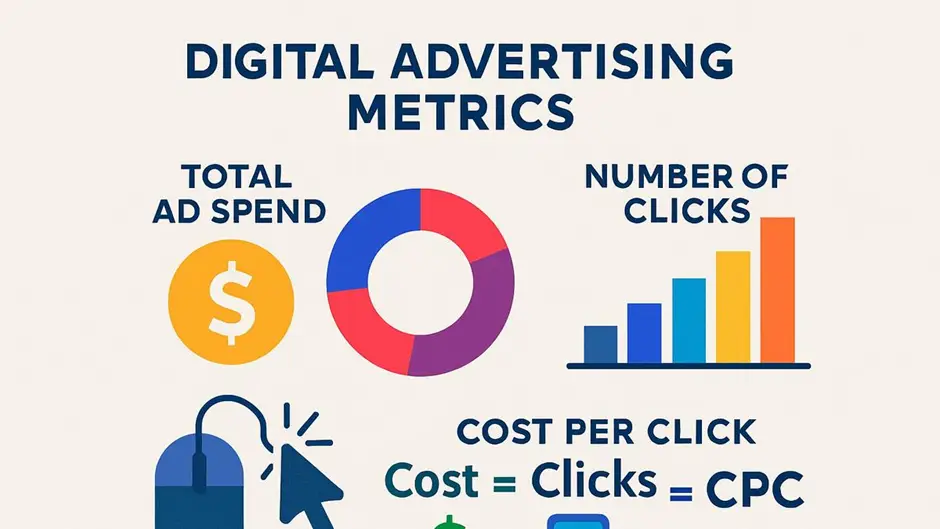
Cost per click in PPC (Pay-Per-Click) Advertising.
PPC marketing is an online advertising model where advertisers pay a fee each time their ad is clicked. Instead of earning website traffic organically through SEO, businesses can instantly drive visitors by running paid ads.
Simple Example:
Imagine you run a digital marketing agency. You want people to find your services quickly. So you create an ad targeting the keyword “best digital marketing agency near me.”
- Your ad appears at the top of Google
- A user clicks your ad
- You pay a small amount for that click
That’s exactly how PPC marketing works.
How PPC (Pay-Per-Click) Advertising Works
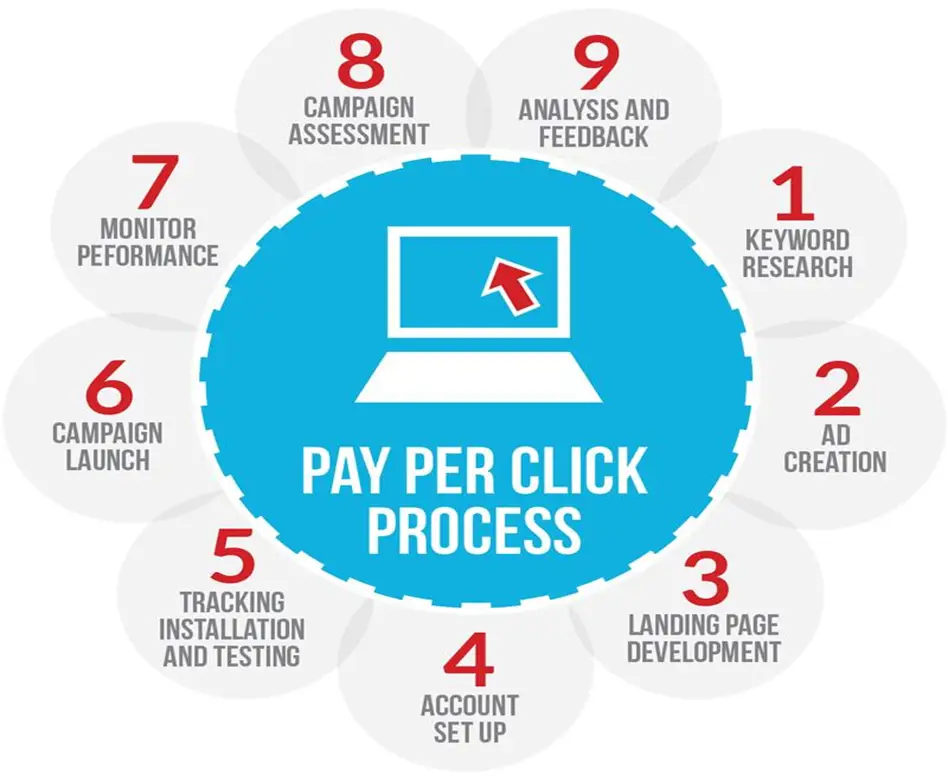
How PPC (Pay-Per-Click) Advertising works step by step.
To understand PPC marketing, let’s break it down into simple steps:
1. Keyword Research
Everything starts with keywords. You need to find what your target audience is searching for. These keywords trigger your ads.
2. Ad Creation
Once you have keywords, you create ads with:
- Catchy headlines
- Clear descriptions
- Strong call-to-action (CTA)
3. Bidding System
You set a bid, which is the maximum amount you’re willing to pay for a click.
4. Ad Auction
Platforms like Google Ads run an auction where multiple advertisers compete for the same keyword. The winner isn’t always the highest bidder—it also depends on ad quality and relevance.
5. Paying for Clicks
When someone clicks your ad, you pay the cost per click (CPC). That’s why it’s called PPC marketing.
Types of PPC (Pay-Per-Click) Advertising
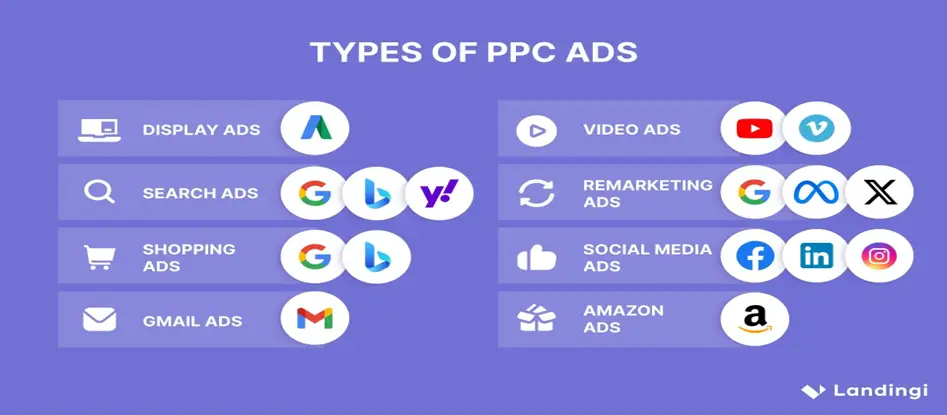
Different types of PPC (Pay-Per-Click) Advertising.
There are different types of PPC marketingAdvertising, and each serves a unique purpose:
1. Search Ads
These are text ads that appear on search engines like Google when users search for specific keywords.
2. Display Ads
Display ads are visual banners shown on websites, apps, or blogs. They help in brand awareness.
3. Social Media Ads
Platforms like Facebook and Instagram allow businesses to run targeted ads based on user interests and behavior.
4. Shopping Ads
These are product-based ads that show images, prices, and product details—ideal for eCommerce businesses.
5. Video Ads
Video ads appear on platforms like YouTube and are great for storytelling and engagement.
Benefits of PPC (Pay-Per-Click) Advertising
Businesses choose PPC (Pay-Per-Click) Advertising because it delivers quick and measurable results. Here are the key benefits:
✅ Instant Traffic
Unlike SEO, which takes months, PPC brings traffic immediately.
✅ Highly Targeted
You can target users based on:
- Location
- Age
- Interests
- Search intent
✅ Full Budget Control
You can start with a small budget and scale as you grow.
✅ Measurable Performance
Track everything, including:
- Clicks
- Impressions
- Conversions
- ROI
✅ High Conversion Potential
Users clicking on ads often have strong intent, which increases the chances of conversions.
PPC vs SEO: Understanding the Difference
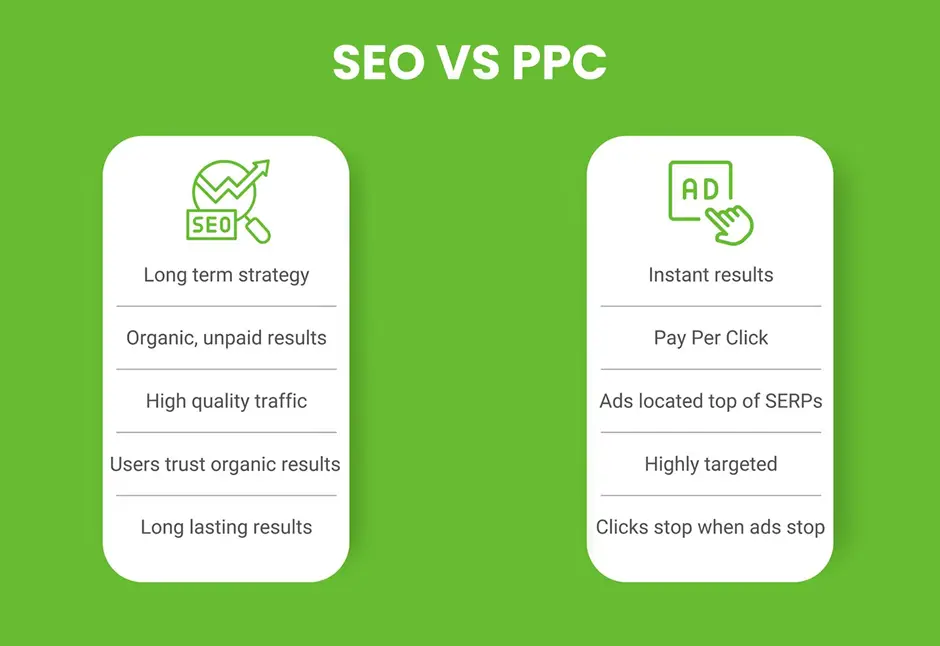
PPC vs SEO comparison infographic.
Both SEO and PPC marketing are important digital marketing strategies, but they work differently.
| Factor | PPC | SEO |
| Traffic | Paid | Organic |
| Speed | Instant | Slow |
| Cost | Pay per click | Free (time investment) |
| Control | High | Limited |
| Results | Short-term | Long-term |
The best approach is to use both SEO and PPC (Pay-Per-Click) Advertising together for maximum growth.
Tips to Run Successful PPC Campaigns
Running successful PPC marketing campaigns requires strategy and continuous optimization.
Focus on High-Intent Keywords
Choose keywords that indicate users are ready to take action.
Write Compelling Ad Copy
Your ad should:
- Grab attention
- Solve a problem
- Include a strong CTA
Optimize Landing Pages
Ensure your landing page matches the ad message and is optimized for conversions.
Use Negative Keywords
Filter out irrelevant searches to save money.
A/B Testing
Test different versions of ads to see what works best.
Common Mistakes in PPC (Pay-Per-Click) Advertising
Many businesses fail in PPC marketing due to avoidable mistakes:
- ❌ Targeting broad or irrelevant keywords
- ❌ Ignoring ad quality and relevance
- ❌ Not optimizing landing pages
- ❌ Skipping conversion tracking
- ❌ Not analyzing data
Avoiding these mistakes can significantly improve your campaign performance.
Internal Linking Strategy
To boost your website’s SEO and engagement, you should include internal links such as:
- Link to your SEO services page
- Link to your Google Ads management services
- Link to other blogs on digital marketing
This helps reduce bounce rate and improves rankings.
Image Optimization Tips
When adding images to your blog:
- Use ALT text like: “PPC (Pay-Per-Click) Advertising example”
- Compress images for faster loading
- Use relevant visuals like ad dashboards or campaign examples.
Conclusion
PPC (Pay-Per-Click) Advertising is one of the most powerful digital marketing strategies for driving instant traffic and generating leads. It allows businesses to reach the right audience at the right time while maintaining full control over their budget and performance.
Whether you are a beginner or a business owner, understanding PPC can help you scale your growth quickly. When combined with SEO, it creates a strong and balanced digital marketing strategy that delivers both short-term and long-term results.